

ZIMBABWE
Kuhvenguhwa Family Artist
Aaron Kuvenguhwa
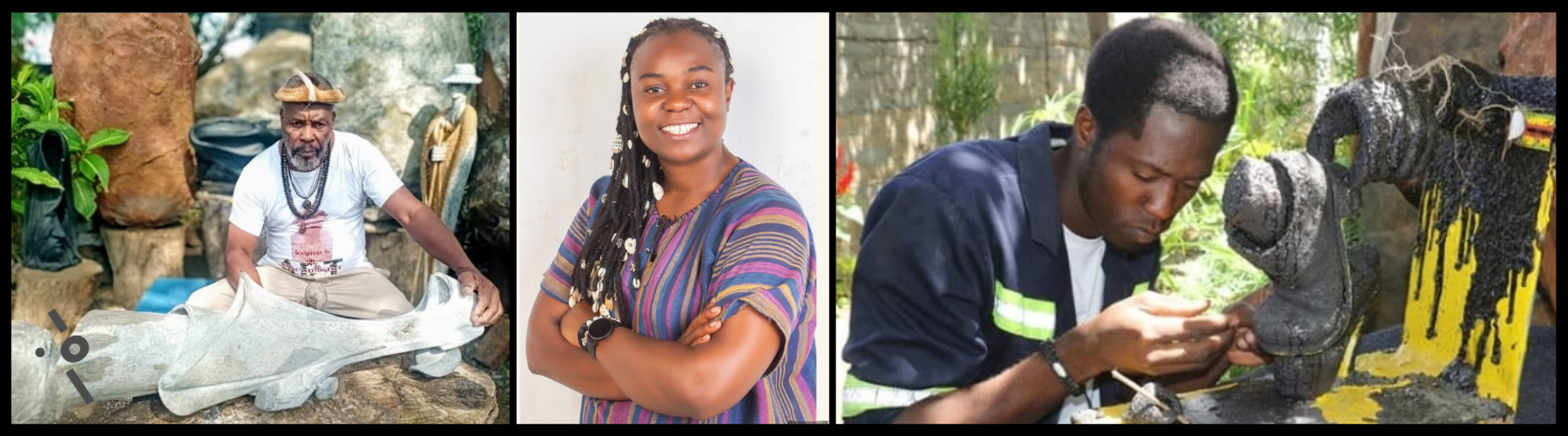
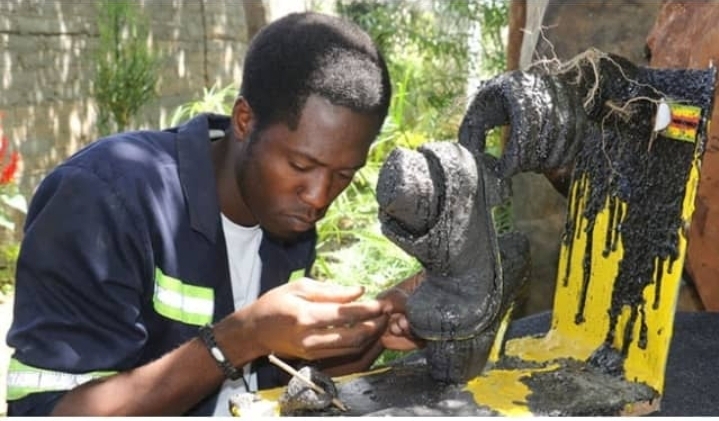
Aaron Kuvenguhwa, 29, is a prominent multidisplinary artist from Zimbabwe. He studied industrial design and creative arts at Chinhoyi university but later dropped out to fully pursue his art passion. His love for art began during his early childhood at the age of 3, imitating cartoons into wire art toys for himself and little brother. He continued his art passion taking much guidance from his father (Samson Kuvenguhwa an established legendary sculptor), highly influenced by his deep love and connection with his spiritual and cultural background and his reaction to environmental, climate and societal issues. He has no formal education in art and everything he knows about art has been self-taught and ancestral gift, he crafts his artworks from sketch to final product, in different unique handmade qualities. His primary love is with three dimension sculpting in any media form be it stone, rigid form, fiber , oil paint, Metal, Wood, Wire, Watercolours, Fabric, Ink and Charcoal. His the founder of ProGift Car Art centre and a community garage where he seeks to help enhance youths creativity incorporating art and cars through “modification and fabrication”, and this have been bringing more increased employment opportunities and creativity to the artists and his local youths, as they spend most of their time at the workshop building cars through art. He encourages these young creatives to be heavily involved with the process as mastering creativity is a learning curve. He promise with enough support and funds raised through sells of his art works he will promote the creativity of more young artists in his Car ART project whilst looking to expand into a toy car business to include children creative love and appreciation for art through teaching them to create their own artistist toys like he did when was young, thus nurturing young creative minds.
ARTIST BIOGRAPHY
Artist Statement: “Through my art you will dive into an art collection, inspired by personal life experiences, societal lived realities, reaction towards climate, environmental and cultural heritage related urgent issues. In most of my artworks l frequently use the hand technique signature, because hands symbolise spiritual power and creativity, thus they play an important role in my culture, particularly in Art as they can be traced back to cave art. Thus hands, have a prominent and important role in sculpting as they are prerequisite in the sculpture creation and process. Within my work am always inspired to create sculptures that sparks conversations, change perspectives, allow and leaves room for audience to question their relationship to the society, nature and environment around them.“Aaron Kuvenguhwa, 29, is a prominent multidisplinary artist from Zimbabwe. He studied industrial design and creative arts at Chinhoyi university but later dropped out to fully pursue his art passion. His love for art began during his early childhood at the age of 3, imitating cartoons into wire art toys for himself and little brother. He continued his art passion taking much guidance from his father (Samson Kuvenguhwa an established legendary sculptor), highly influenced by his deep love and connection with his spiritual and cultural background and his reaction to environmental, climate and societal issues. He has no formal education in art and everything he knows about art has been self-taught and ancestral gift, he crafts his artworks from sketch to final product, in different unique handmade qualities. His primary love is with three dimension sculpting in any media form be it stone, rigid form, fiber , oil paint, Metal, Wood, Wire, Watercolours, Fabric, Ink and Charcoal. His the founder of ProGift Car Art centre and a community garage where he seeks to help enhance youths creativity incorporating art and cars through “modification and fabrication”, and this have been bringing more increased employment opportunities and creativity to the artists and his local youths, as they spend most of their time at the workshop building cars through art. He encourages these young creatives to be heavily involved with the process as mastering creativity is a learning curve. He promise with enough support and funds raised through sells of his art works he will promote the creativity of more young artists in his Car ART project whilst looking to expand into a toy car business to include children creative love and appreciation for art through teaching them to create their own artistist toys like he did when was young, thus nurturing young creative minds.
Samson Kuvenguhwa
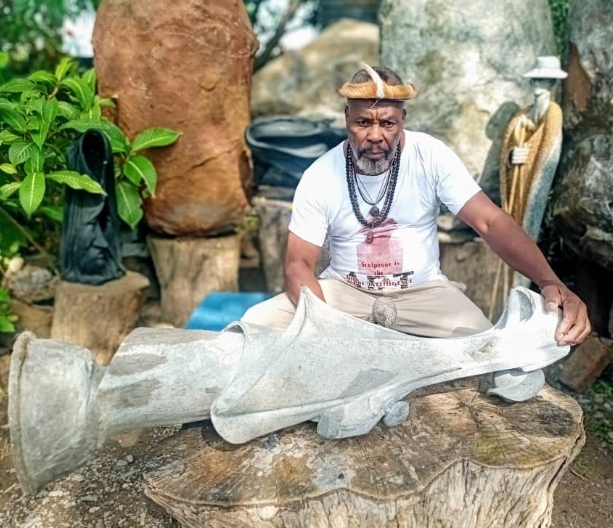
Samson Kuvenguhwa, 71, was born in 1954, Mudzi District, in the Eastern border of Zimbabwe. He is third born in a family of six, and a member of the apostolic faith Mission Church. He started curving at the age of 10, inspired by both his grandparents who were blacksmiths. They used wood to make wooden plates and walking sticks and also used Illala to make hats and baskets. Sometimes he also joined his grandmother who was also a potter.
When Samson left school he became a waiter. He however realized that his talent was in curving and started curving by himself using soap stone in 1974. In 1977 he joined Cannan Partson and formed his own group 5 Km from Harare along Bulawayo road, which is still operating today as Kubatana Craft Center. In 1980 Samson left his group and went back to his rural areas. In his rural areas, there is a respected cultural area that is well known as Mapiti. Mapiti is a small mountain that was destroyed by Nyadire River, leaving a lot curves existent in the area. During the war, before the whites came to this country, people and animals used to hide in the curves, hence the name Mapiti was formed due to the sound produced by both the animals and people. One day Samson thought that it, if musicians and fashion designers are able to create new style in music and fashion and give them names, then why not we artists? Samson then decided to combine shona arts, abstracts, fine arts, balancing rocks, curves and clouds and named it Mapiti Art Style, so that his sculptures resembles dried trees or ancient clay well fired not from the kiln in appearance, or burned wood, bronze, custard iron and it appeared as century pieces.
In 1982 Samson curved three good pieces and took them to the National Gallery for exhibition and won the 1st price among the countries showcasing namely Zimbabwe, Zambia, Malawi, Botswana and Tanzania, with a piece entitled Tonga Smiling Face that was sponsored by Nedlow. In 1983 he joined the Shona Sculptures for only 3 months but he was not satisfied and returned back to his own group. In 1989 he was invited again by Roy Guthrie to Chapungu Sculptures Park. Since Mapiti was an outstanding style it became hardly enough for Roy Gathrey to promote it as Shona Art, as well as for customers to understand it as they were used to Shona Art.
In 1992 his works were exhibited in the National Gallery with a piece called Shona Woman and won second price sponsored by Mobile Oil. In 1992 Samson as an artist, with his own image who doesnt like to work among others, copy or repeat any of his pieces, left Chapungu and started to work alone at his home where he is still operating from to date. In 1994 he was invited to the First Gala in Switzerland by Dr D Ruff where Mapiti was first published and promoted. Samson hosted a one-man exhibition in 1995 to 1996 with his work in one of the gallery at Calton center in South Africa. In 1997 to 1998 his pieces were exhibited in Germany and Australia. As of today Mapiti is now recognized globally in countries such as USA, South Korea, Austria, Australia, Belgium, Germany and Denmark. Now Samson Is accompanied by his sons Obey, Aaron and Fortune Kuvenguhwa and daughter Sarah who seem to have inherited their father’s great sculpturing talents.
His a Zimbabwean sculptor whose highly spiritual, dream-inspired sculptors blend into his deep culture backgropund influence, more than a sculptor—he is a storyteller, a visionary, and a guardian of Zimbabwean heritage. Sampson’s work is deeply rooted in Shona spirituality, mythology, and the unseen forces that shape human existence. His sculptures, meticulously carved from stone, are not just artistic creations but embodiments of ancestral wisdom and personal revelations. He believes that stone holds stories waiting to be revealed, and through his hands, these hidden narratives emerge. His works are a testament to the timeless nature of African artistry, drawing from traditional influences while engaging with contemporary global themes, such as that of family, love, joy, culture, life experience among others.
Samson Kuvenguhwa's unique “Mapiti DryTree Style” is an artistic signature showcasing modern art Shona sculpture at its best. The signature features straight lines, unique sculpting techniques influenced by his dreams, spirituality, and the organic forms of nature. His Dry Tree and Mapiti styles showcase his ancestral wisdom, struggle, and renewal into stone, making each sculpture a timeless connection to African heritage. The consistency his style is evident in every piece, while Sam subtly shifts his style over the years, demonstrating his remarkable creative artistic skill and versatility. He signs most of his sculptures 'Sam Kuve
Sampson’s art has been exhibited in Zimbabwe and internationally, most recently at the Andakulova Gallery in Dubai, where his sculptures were showcased alongside some of Zimbabwe’s leading contemporary artists. His pieces are now available on Artsy, offering collectors and art lovers the opportunity to own sculptures that embody the spiritual and cultural heartbeat of Africa.
ARTIST BIOGRAPHY
Artist Statement: “l believe my “Dry tree style” and “Mapiti Art Style” art serve as a time capsule, encapsulating the rich Zimbabwean arts and culture heritage spirit of an era, reflecting strength and resilience of African traditions and their relation to environment, nature and society. Made it a point never to resculpt anything, as each of my stroke and sculpture carries its own layers of meaning and different story which captures its own hidden strength of life struggles and guidance received from the spirit world, through visions and dreams. Displayed sculptures in my gallery are my finale and last works as age is now catching up with me and spending longer hours in the workshop is now a challenge. This collection of sculptures holds a deep significance as they are also an important tribute to my artistic career, a final farewell to my rich creative mindset and hardworking artistic journey over the years.“Samson Kuvenguhwa, 71, was born in 1954, Mudzi District, in the Eastern border of Zimbabwe. He is third born in a family of six, and a member of the apostolic faith Mission Church. He started curving at the age of 10, inspired by both his grandparents who were blacksmiths. They used wood to make wooden plates and walking sticks and also used Illala to make hats and baskets. Sometimes he also joined his grandmother who was also a potter.
When Samson left school he became a waiter. He however realized that his talent was in curving and started curving by himself using soap stone in 1974. In 1977 he joined Cannan Partson and formed his own group 5 Km from Harare along Bulawayo road, which is still operating today as Kubatana Craft Center. In 1980 Samson left his group and went back to his rural areas. In his rural areas, there is a respected cultural area that is well known as Mapiti. Mapiti is a small mountain that was destroyed by Nyadire River, leaving a lot curves existent in the area. During the war, before the whites came to this country, people and animals used to hide in the curves, hence the name Mapiti was formed due to the sound produced by both the animals and people. One day Samson thought that it, if musicians and fashion designers are able to create new style in music and fashion and give them names, then why not we artists? Samson then decided to combine shona arts, abstracts, fine arts, balancing rocks, curves and clouds and named it Mapiti Art Style, so that his sculptures resembles dried trees or ancient clay well fired not from the kiln in appearance, or burned wood, bronze, custard iron and it appeared as century pieces.
In 1982 Samson curved three good pieces and took them to the National Gallery for exhibition and won the 1st price among the countries showcasing namely Zimbabwe, Zambia, Malawi, Botswana and Tanzania, with a piece entitled Tonga Smiling Face that was sponsored by Nedlow. In 1983 he joined the Shona Sculptures for only 3 months but he was not satisfied and returned back to his own group. In 1989 he was invited again by Roy Guthrie to Chapungu Sculptures Park. Since Mapiti was an outstanding style it became hardly enough for Roy Gathrey to promote it as Shona Art, as well as for customers to understand it as they were used to Shona Art.
In 1992 his works were exhibited in the National Gallery with a piece called Shona Woman and won second price sponsored by Mobile Oil. In 1992 Samson as an artist, with his own image who doesnt like to work among others, copy or repeat any of his pieces, left Chapungu and started to work alone at his home where he is still operating from to date. In 1994 he was invited to the First Gala in Switzerland by Dr D Ruff where Mapiti was first published and promoted. Samson hosted a one-man exhibition in 1995 to 1996 with his work in one of the gallery at Calton center in South Africa. In 1997 to 1998 his pieces were exhibited in Germany and Australia. As of today Mapiti is now recognized globally in countries such as USA, South Korea, Austria, Australia, Belgium, Germany and Denmark. Now Samson Is accompanied by his sons Obey, Aaron and Fortune Kuvenguhwa and daughter Sarah who seem to have inherited their father’s great sculpturing talents.
His a Zimbabwean sculptor whose highly spiritual, dream-inspired sculptors blend into his deep culture backgropund influence, more than a sculptor—he is a storyteller, a visionary, and a guardian of Zimbabwean heritage. Sampson’s work is deeply rooted in Shona spirituality, mythology, and the unseen forces that shape human existence. His sculptures, meticulously carved from stone, are not just artistic creations but embodiments of ancestral wisdom and personal revelations. He believes that stone holds stories waiting to be revealed, and through his hands, these hidden narratives emerge. His works are a testament to the timeless nature of African artistry, drawing from traditional influences while engaging with contemporary global themes, such as that of family, love, joy, culture, life experience among others.
Samson Kuvenguhwa's unique “Mapiti DryTree Style” is an artistic signature showcasing modern art Shona sculpture at its best. The signature features straight lines, unique sculpting techniques influenced by his dreams, spirituality, and the organic forms of nature. His Dry Tree and Mapiti styles showcase his ancestral wisdom, struggle, and renewal into stone, making each sculpture a timeless connection to African heritage. The consistency his style is evident in every piece, while Sam subtly shifts his style over the years, demonstrating his remarkable creative artistic skill and versatility. He signs most of his sculptures 'Sam Kuve
Sampson’s art has been exhibited in Zimbabwe and internationally, most recently at the Andakulova Gallery in Dubai, where his sculptures were showcased alongside some of Zimbabwe’s leading contemporary artists. His pieces are now available on Artsy, offering collectors and art lovers the opportunity to own sculptures that embody the spiritual and cultural heartbeat of Africa.